
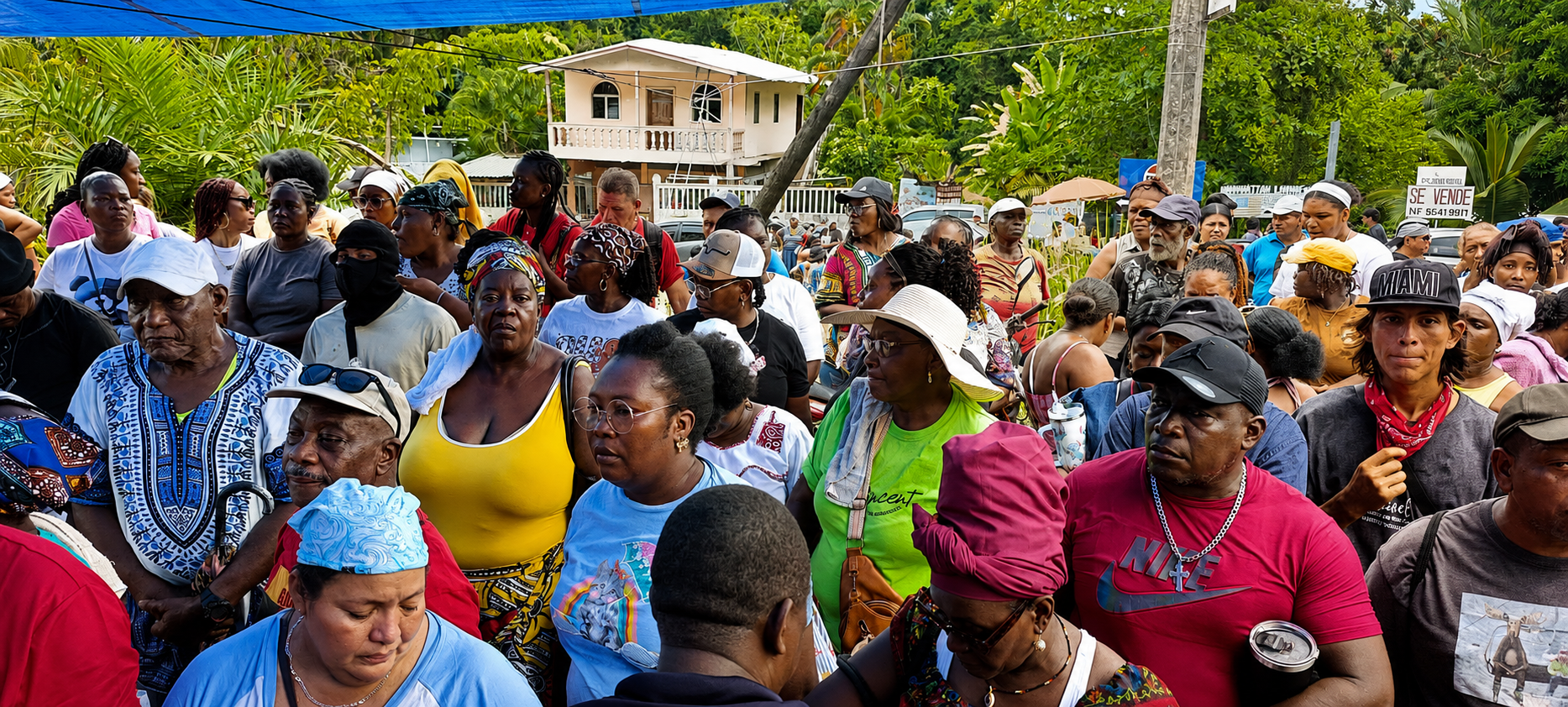
Honduras Decree 107-2026 is not simply a law about protecting productive land.
It creates a new enforcement regime that gives registered land and selected economic activities immediate institutional protection while agrarian, ancestral, collective, and territorial claimants may be required to continue litigating after possession has already changed.
I prepared this English-language legal analysis because much of the public discussion surrounding the decree is taking place in Spanish, while its consequences extend far beyond Honduras.
Garifuna communities and members of the diaspora, Indigenous peoples, campesino organizations, journalists, researchers, lawyers, investors, human-rights advocates, and public officials all need access to a clear explanation of what the decree says, how it operates, and why it has generated serious constitutional and international concern.
The full document is available below as a downloadable PDF.
Download the Full Legal Analysis
This 21-page study examines the official text of Decree 107-2026, its enforcement structure, the constitutional provisions it implicates, and the international obligations that Honduras must observe.
[INSERT DOWNLOAD MONITOR BUTTON HERE]
What Decree 107-2026 Changes
The decree entered into force on June 26, 2026. It applies to agroindustry, energy projects, tourism, livestock, small agricultural producers, associated infrastructure, logistics, transportation, and land connected to those activities.
Its importance does not rest only on the economic sectors it protects. The central issue is the enforcement structure it creates.
The decree grants preferential administrative treatment to protected projects, shields qualifying land from certain forms of legal affectation, requires immediate institutional intervention, authorizes evictions and restoration of possession, and imposes potential civil, administrative, and criminal liability on public officials who delay or refuse to act.
Lawful property, investment, employment, and agricultural production deserve legal protection. The question raised by this law is different:
Should a registered title or prior possession trigger immediate police restoration before the State examines credible agrarian, ancestral, collective, cadastral, or title-origin disputes?
That question cannot be answered by treating every land conflict as a simple confrontation between an owner and an unlawful occupant.
A Registered Title Is Important, but It Is Not the End of the Legal Inquiry
Honduras has a long history of unresolved agrarian claims, incomplete collective titling, overlapping registrations, cadastral inconsistencies, expansion of municipal boundaries into communal lands, transfers of disputed property, concessions granted without adequate consultation, and judicial proceedings that remain unresolved for years.
A registered title is important evidence. It must be examined seriously. But registration does not eliminate the need to investigate:
- the origin of the title;
- the authority of the person who transferred the property;
- possible cadastral overlap;
- pending agrarian proceedings;
- collective ownership restrictions;
- traditional occupation;
- municipal or State actions affecting the territory;
- and binding judgments concerning the same land.
When the State changes possession first and investigates those questions afterward, the later judicial process may arrive too late.
Homes, crops, fishing areas, community access, tools, cultural spaces, and territorial presence may already have been lost.
Why This Matters to Garifuna and Indigenous Communities
The danger is especially serious for communities whose territorial rights do not depend exclusively on an ordinary individual deed.
ILO Convention No. 169 protects lands traditionally occupied by Indigenous and tribal peoples and requires consultation when legislative or administrative measures may affect them directly.
Honduras is also subject to binding Inter-American Court judgments involving the Garifuna communities of Triunfo de la Cruz, Punta Piedra, San Juan, and Cayos Cochinos. Those cases address collective property, consultation, territorial regularization, effective possession, participation, cultural identity, food, and the State’s obligation to protect communal territory.
The State cannot fail to title, delimit, demarcate, or regularize collective territory and then use that same lack of formal completion as evidence against the community.
This is not an argument against private property. It is an argument for examining the complete legal history before coercive action makes the damage irreversible.
The Risk to Campesino Communities
The Constitution of Honduras does not treat agrarian reform as an obsolete political idea. It recognizes agrarian reform as an essential part of national development and connects land tenure, rural justice, production, social function, and campesino participation.
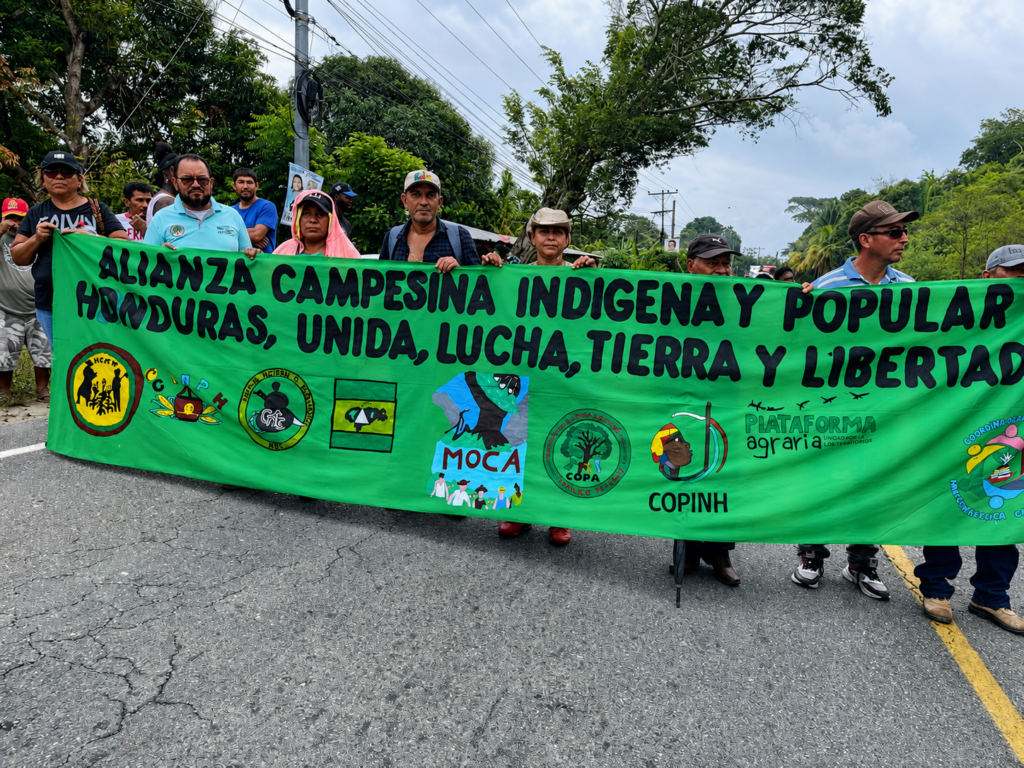
Decree 107-2026 changes the order in which the State responds.
Instead of first determining whether a dispute involves national land, ejidal land, agrarian-reform rights, collective territory, overlapping titles, incomplete adjudication, or failure of the social function of property, the enforcement system begins by asking whether the claimant has a registered title or prior possession linked to a protected economic sector.
For organized rural communities, this may transform an unresolved agrarian dispute into a police or criminal matter before the agrarian claim receives a final determination.
Protest, Public Officials, and Institutional Pressure
The decree also addresses demonstrations, road occupations, transport routes, strikes, and access to productive projects.
Authorities receive instructions to intervene immediately, while delay, negligence, or refusal may expose officials to personal responsibility.
That structure creates pressure inside the institutions themselves.
A prosecutor, police officer, municipal authority, or administrator may conclude that intervention is the safest professional decision, even where the facts require investigation, mediation, title verification, consultation, or prior judicial control.
The full analysis examines why this pressure affects prosecutorial objectivity, administrative independence, due process, freedom of assembly, and effective judicial protection.
What the Full PDF Contains
The downloadable study includes:
- an article-by-article analysis of Decree 107-2026;
- constitutional and statutory concordances;
- the sequence between the Rigores massacre and the final legislative process;
- the impact on campesino communities;
- the distinct risk to Garifuna and Indigenous territories;
- the four collective Garifuna judgments against Honduras;
- the 2026 situation in San Juan, Tela;
- the legal meaning of criminalization and organized-crime narratives;
- comparative constitutional precedent from Colombia;
- the constitutional and human-rights provisions implicated;
- my legal conclusion concerning repeal;
- and minimum safeguards that a replacement law should contain.
The PDF distinguishes the official text of the law, verified facts, public allegations, and my own legal conclusions.
My Legal Conclusion
I do not conclude that Honduras should leave lawful producers, property owners, workers, food supply chains, or essential infrastructure without protection.
I conclude that the architecture of Decree 107-2026 is legally defective.
Its principal provisions operate together as a system of economic priority, registered-title protection, immediate enforcement, restoration of possession, pressure on public officials, and litigation after the facts on the ground have already changed.
A fair replacement law can protect lawful production while also requiring prior judicial review, agrarian investigation, title-origin examination, consultation, territorial safeguards, proportional protection of protest, and compliance with binding international judgments.
Legal security does not mean selecting the strongest document and applying the fastest police response.
It means determining the right fairly before the State makes the harm irreversible.
Download Honduras Decree 107-2026: Full Legal Analysis
The complete English-language analysis is available here:
The document may be useful to communities, journalists, lawyers, students, researchers, public officials, members of the diaspora, and anyone seeking to understand the legal and human consequences of the new Honduran enforcement regime.
This publication provides general legal analysis. It does not constitute legal advice for any specific person, community, company, property, or judicial proceeding.